Essential Adult Skills: Budget, Communicate, Manage Life

Essential Adult Skills for Everyday Success: Budgeting, Communication, Media Literacy, and Life Management
Adult life gets easier when a few core skills are practiced consistently: handling money with clarity, communicating without confusion, sorting reliable information from noise, and running day-to-day responsibilities with simple systems. This guide organizes those skills into practical steps that can be applied immediately, even with limited time and energy.
Start with a simple “life operating system”
Instead of trying to fix everything at once, build a small system you can run every week. Think of it as four pillars you maintain: money, communication, information hygiene, and routines.
- Pick 4 pillars to maintain weekly: money, communication, information hygiene, and routines.
- Use one capture tool: a notes app or notebook for tasks, bills, and reminders to reduce mental load.
- Create a weekly reset: 20–30 minutes to review your calendar, money, and the top 3 priorities.
- Set “minimum standards” for tough weeks: pay essentials, reply to key messages, basic meals, and sleep.
- Track progress with small metrics: bills paid on time, meals cooked, or hours of focus time.
Weekly reset checklist (15–30 minutes)
| Area | What to review | Quick action |
|---|---|---|
| Money | Upcoming bills, account balances, recent spending | Schedule payments; set a weekly spending limit |
| Calendar | Appointments, deadlines, travel time | Block 2 focus sessions; confirm important meetings |
| Home & life tasks | Groceries, laundry, errands, health admin | Choose 1 errand day; order essentials online |
| Communication | Unanswered texts/emails, pending decisions | Reply to the top 5; schedule 1 tough conversation |
| Information | News/social feeds, subscriptions, alerts | Unfollow low-value sources; set 1 no-scroll window |
Budgeting basics that work in real life
A budget works best when it reduces decision fatigue. The goal isn’t to be perfect—it’s to make “good enough” automatic and leave fewer surprises at the end of the month.
- Separate decisions from willpower: automate bills and savings where possible. Set autopay for essentials and a recurring transfer to savings.
- Use “needs / goals / wants”: Needs (rent, utilities, basic groceries), goals (debt payoff, emergency fund), wants (eating out, upgrades). This structure cuts down on guilt and keeps tradeoffs visible.
- Create a starter emergency buffer: even $250–$1,000 can prevent a small problem from becoming credit-card debt.
- Try a weekly spending plan: for variable costs like food, transport, and fun. Weekly limits catch overspending earlier than a monthly budget.
- Use a pause rule: 24 hours for small non-essentials, 7 days for bigger purchases. Many “needs” fade once the urgency wears off.
- Review subscriptions quarterly: cancel anything not used in the last month.
For practical budgeting tools and explanations that are easy to apply, the Consumer Financial Protection Bureau (CFPB) offers straightforward resources on spending plans and saving.
Communication skills that reduce conflict and increase clarity
Clear communication prevents repeat arguments, missed expectations, and silent resentment. A helpful rule: lead with your purpose, not your frustration.
- Lead with purpose: say what you need—information, a decision, support, or a boundary.
- Use “I” statements with specifics: describe the situation, the impact, and the requested change. Example: “When plans change last minute, I feel stressed. Can we confirm by 3 p.m.?”
- Confirm understanding: “What I heard is… Did I get that right?” This single step prevents most miscommunication spirals.
- Set boundaries with alternatives: “I can’t do tonight; I can do Saturday morning.” Boundaries land better when you offer a workable option.
- Use a hard-convo structure: goal → facts → feelings → options → next step.
- Keep digital communication clean: one topic per message thread when possible, and summarize decisions (who’s doing what, by when).
If you want guided prompts for sensitive topics, the Conflict-Resolution Workbook for Couples | Printable Relationship Communication eBook is a structured way to practice listening, repair, and calmer decision-making.
Media literacy for daily decisions
Media literacy isn’t just about politics or big headlines. It affects buying decisions, health choices, and whether anxiety gets fed by low-quality information.
- Check the claim type: news report, opinion, sponsored content, or personal anecdote.
- Find the primary source: the original study, official data, full quote, or direct document—before you act.
- Scan for red flags: missing dates, no methodology, emotional hooks, or unclear author credentials.
- Cross-check before sharing: verify with at least two independent outlets.
- Separate “true” from “useful”: accurate information can still be irrelevant to your priorities or situation.
- Reduce algorithmic noise: prune feeds, limit notifications, and schedule intentional catch-up windows.
For scam awareness and practical steps to protect yourself, the Federal Trade Commission (FTC) provides clear guidance on spotting and reporting scams.
To strengthen quick source-checking habits online, Stanford’s Civic Online Reasoning resources show how to verify claims without getting pulled into endless tabs.
Life management: routines that protect time and energy
Life management is less about doing more and more about making the important things easier to start. Small systems beat big bursts of motivation.
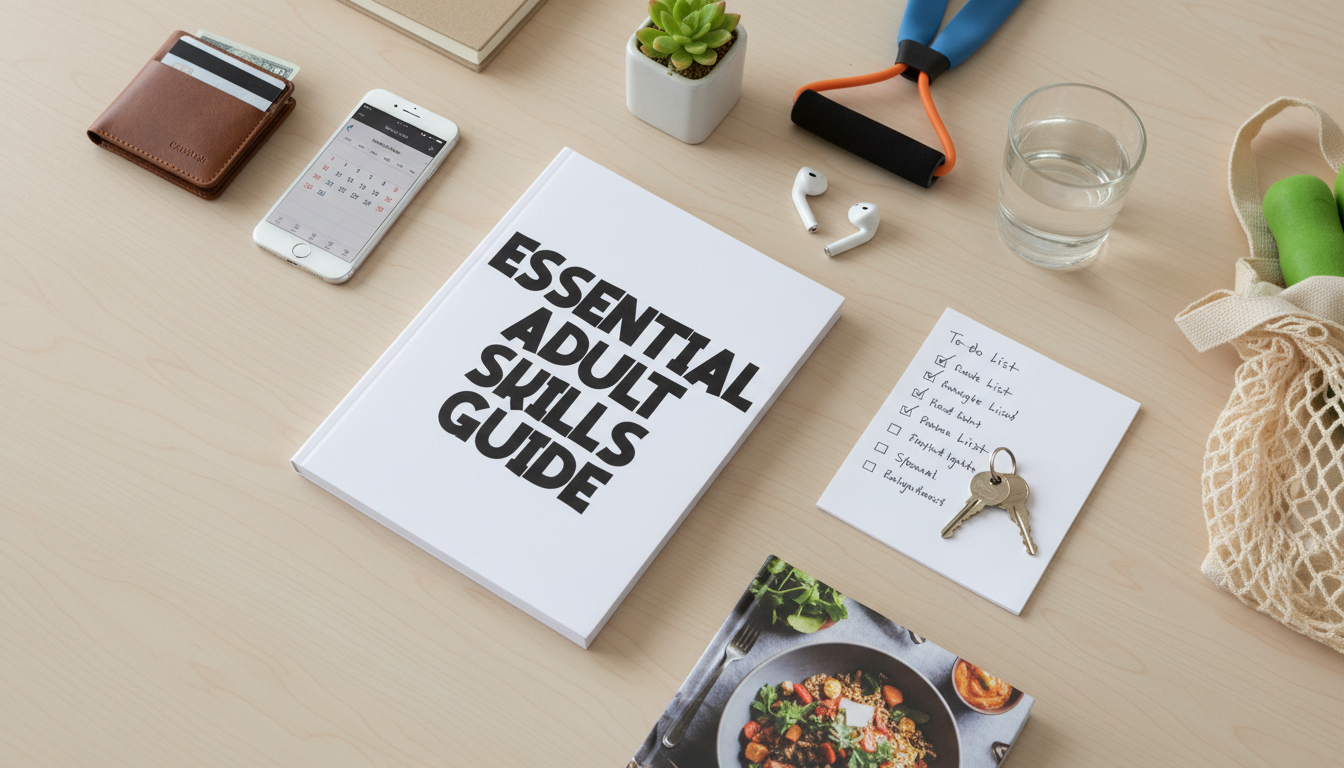
For an organized, all-in-one reference that connects money, communication, information habits, and daily systems, the Essential Adult Skills Guide | Budgeting, Communication, Media Literacy & Life Management Tips for Everyday Success can help you turn these ideas into a repeatable routine.
Build the 11 essentials without overwhelm
Tools that help turn skills into habits
If confidence and conversation practice are your biggest bottleneck for showing up socially or dating, Build Unshakable Confidence for Dating in 5 Days | Audio Program can provide structured, bite-sized training you can revisit when needed.
FAQ
What are the 11 essential life skills?
Budgeting, saving, cooking basics, time management, communication, conflict resolution, critical thinking, media literacy, basic health habits, basic maintenance, and career readiness. Practice them weekly by doing one small “proof” action for each (like tracking spending once, cooking two simple meals, or sending one clear boundary message).










Leave a comment